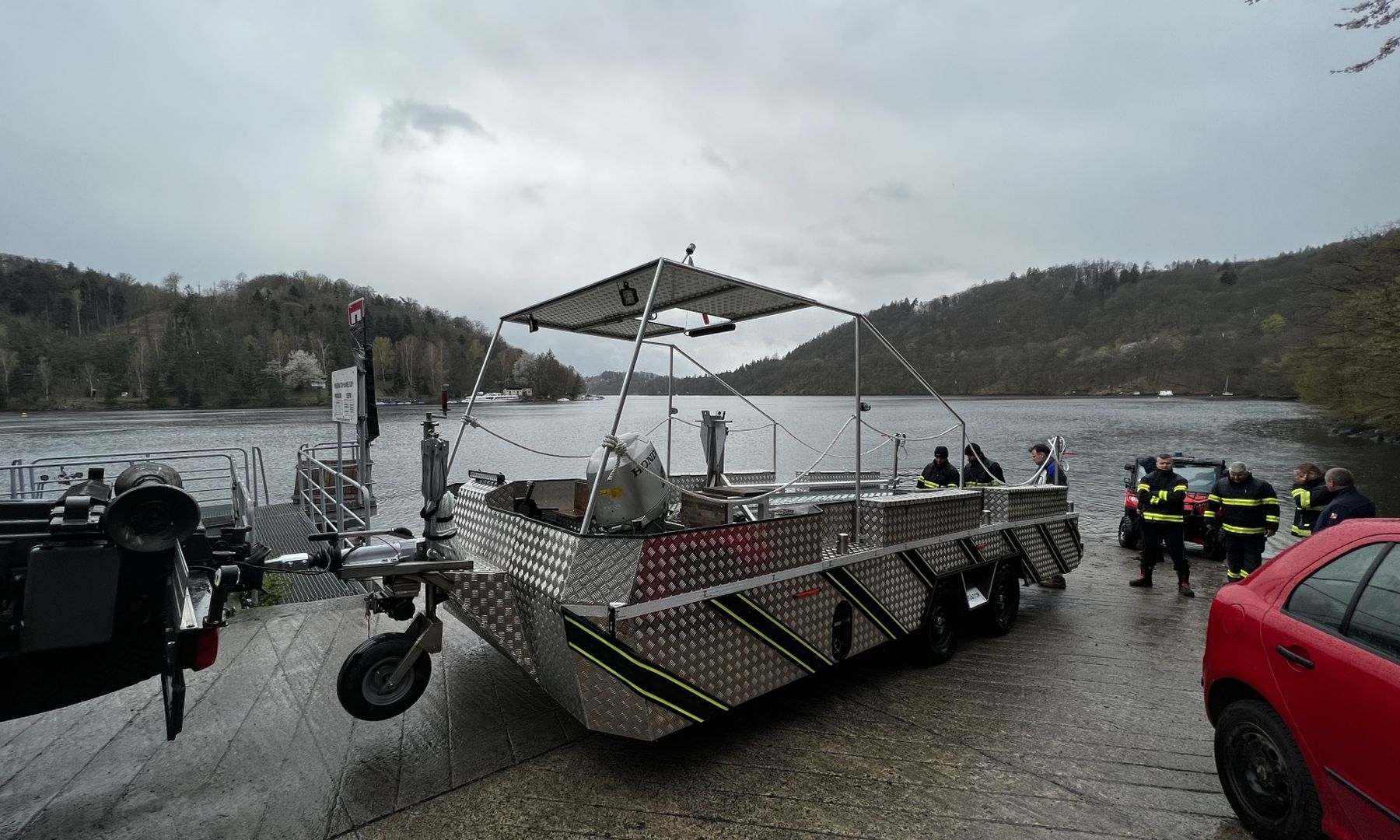
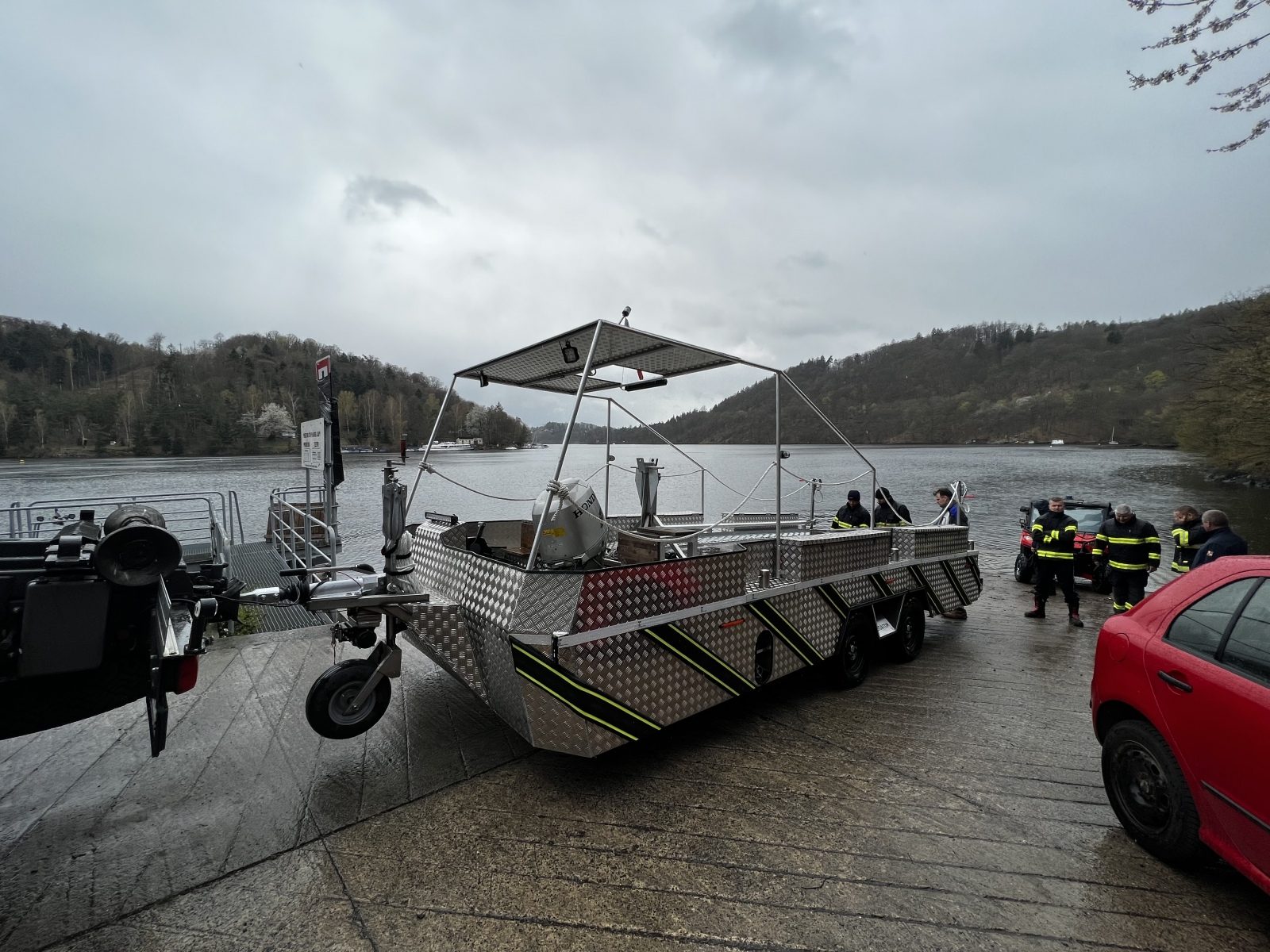
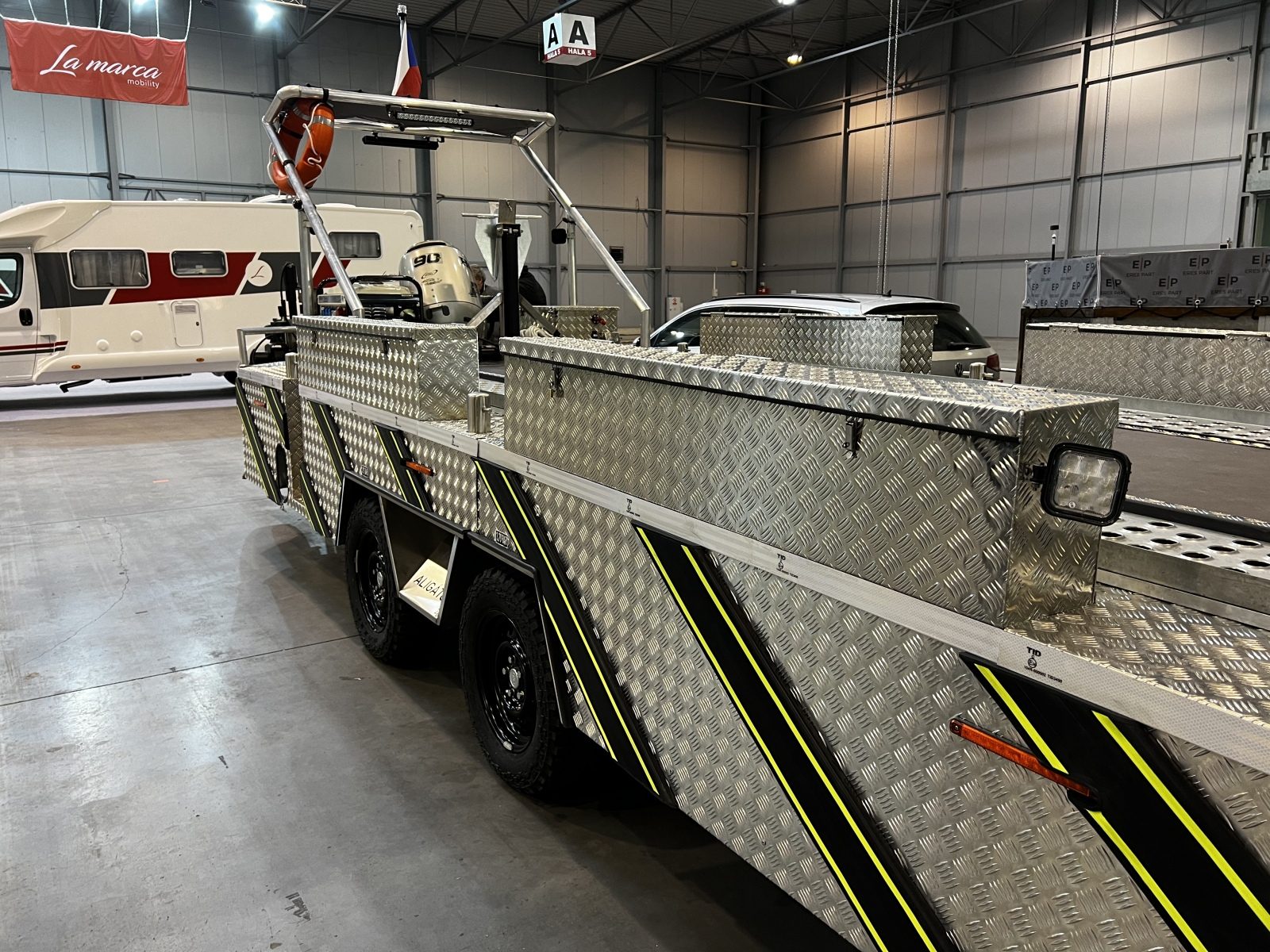
A multi-purpose aluminium craft built for rough handling — floods above all, where nobody knows what lies under the surface. It floats in as little as 60 cm (24 in) of water. Wheels and a drawbar are built in, so it travels the road on its own as a trailer rated to 3.5 t.
What it does
Sets up a ferry between banks, carries firefighting equipment to a boat fire, evacuates people from excursion vessels, tows damaged craft.
Lands equipment where the only access is from the water — a forest fire by a lake, a flooded area. It will also tow smaller vehicles out of flooded ground.
Structure
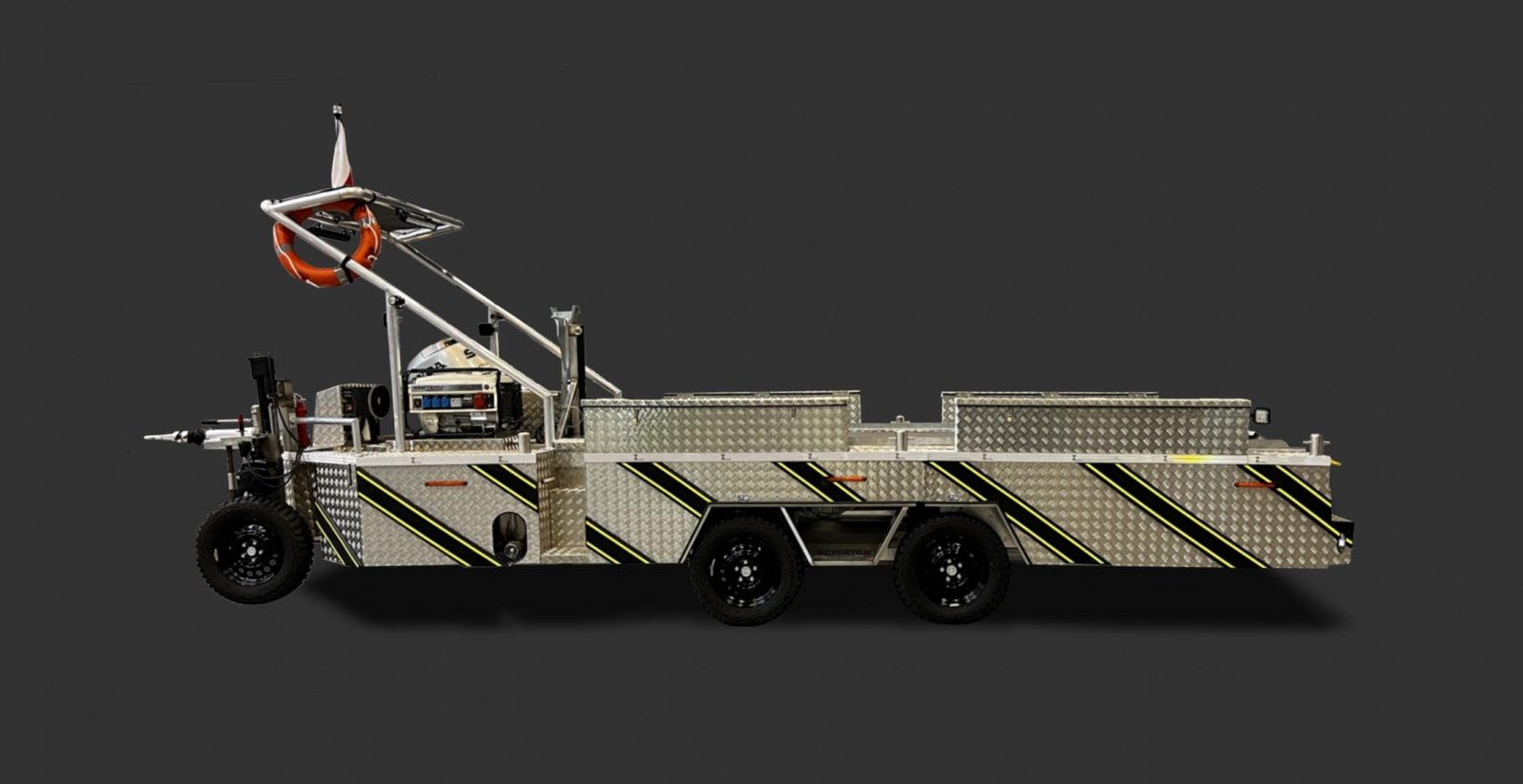
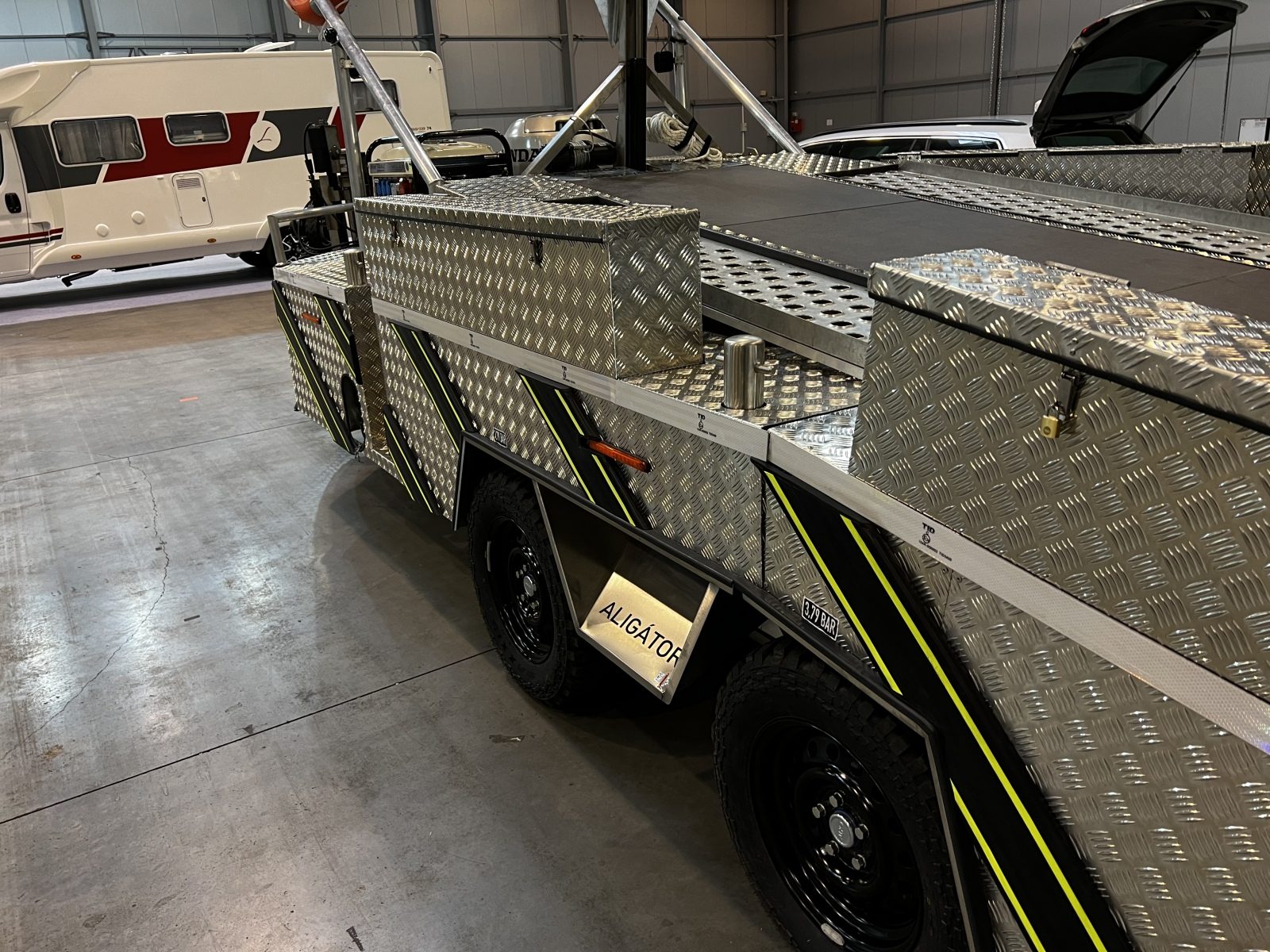
The hull is made of displacement bodies filled with closed-cell foam; puncturing them does not affect the craft afloat. Inside are two connected tanks holding 1,700 l (450 gal).
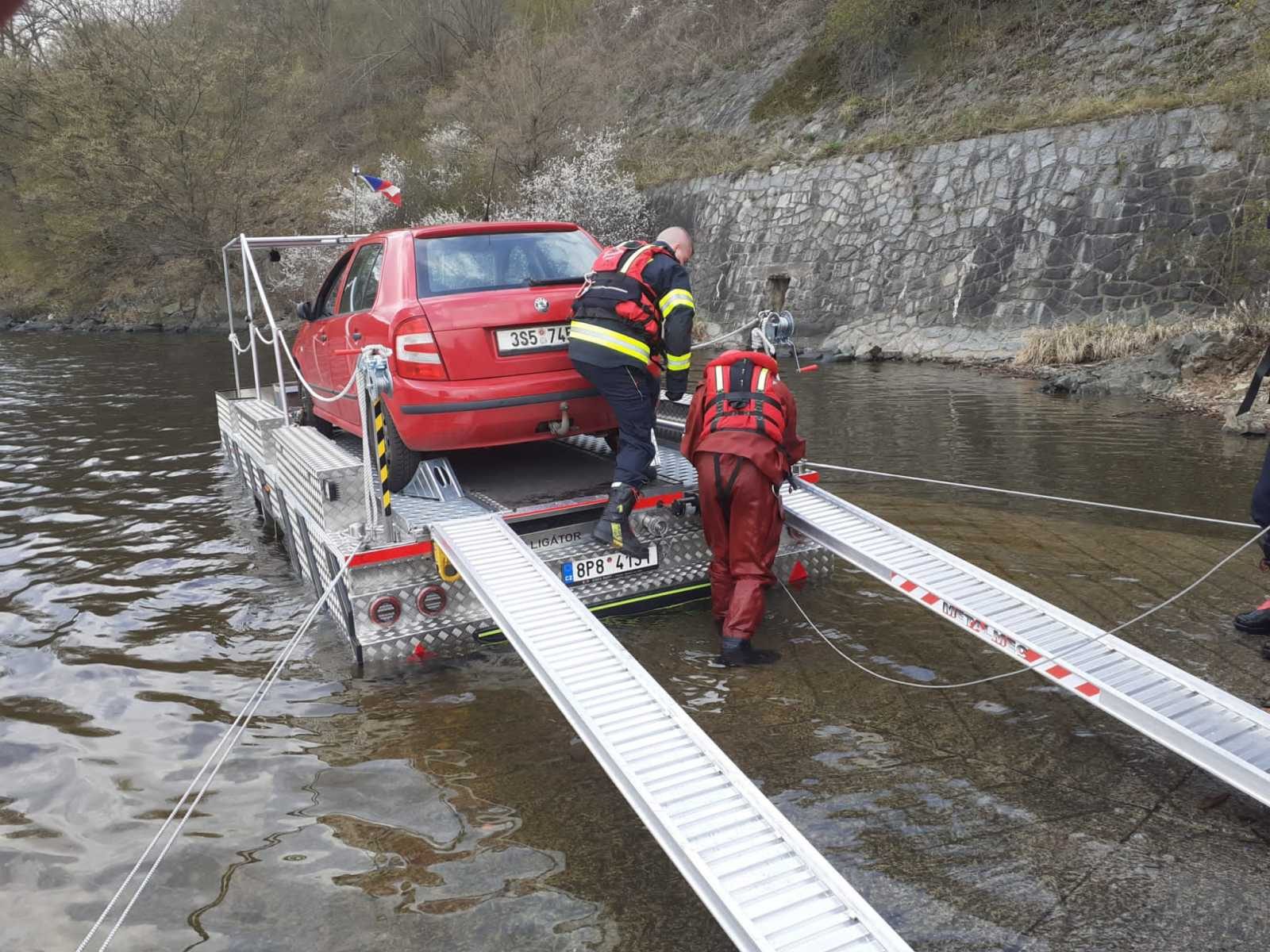
The rear cargo deck carries 2 t (4,400 lb) on the water — a car up to one tonne, or twelve people. Under the front canopy there is seating for four including the helmsman, with eight more along the sides at the back.
Steering
We were the first to put the outboard — a Honda 90 HP — in the middle of the bow. That lets the craft move in among swimmers without the propeller being a hazard, and the helmsman, also at the bow, can see exactly where he is heading.
Landing and rescue work
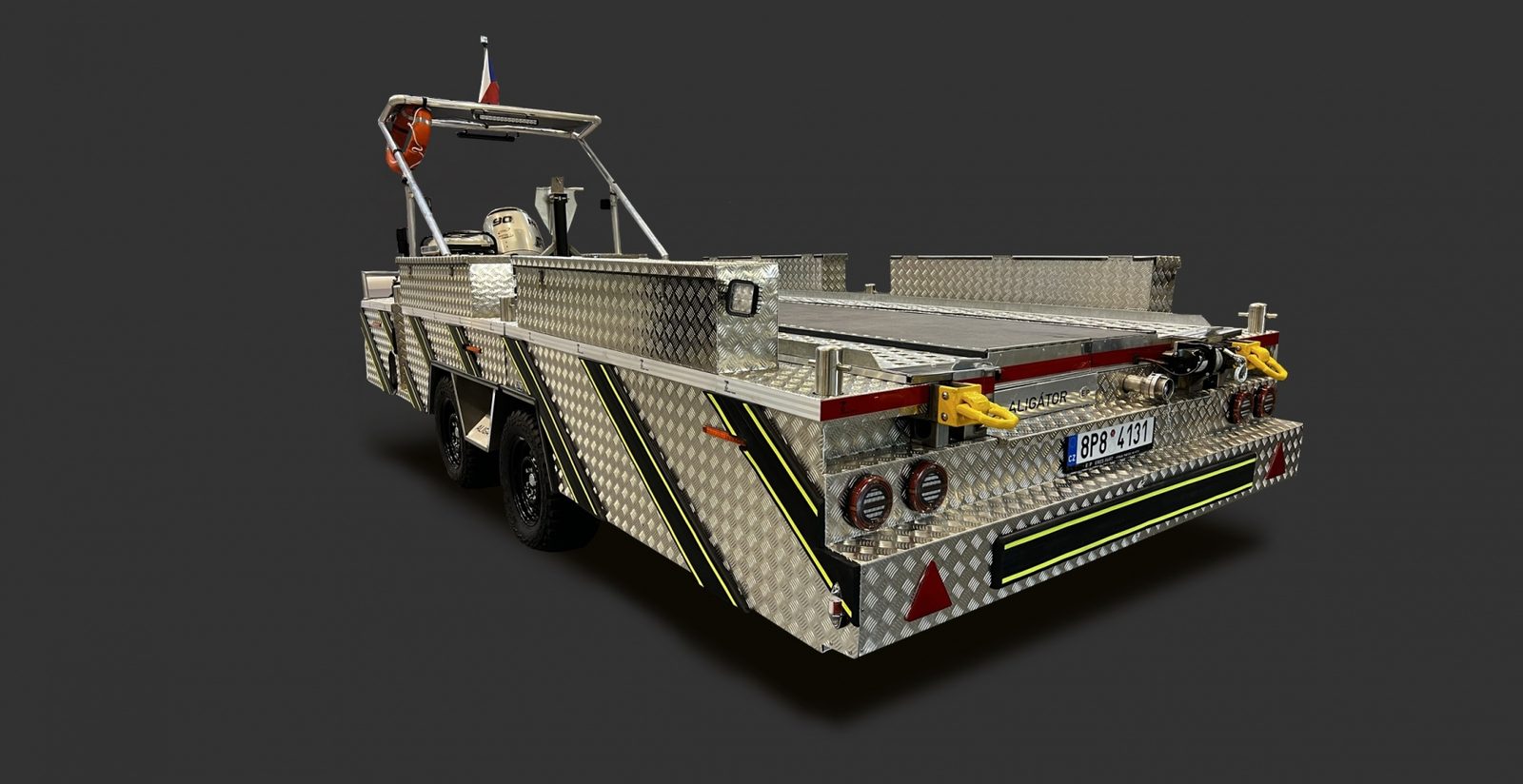
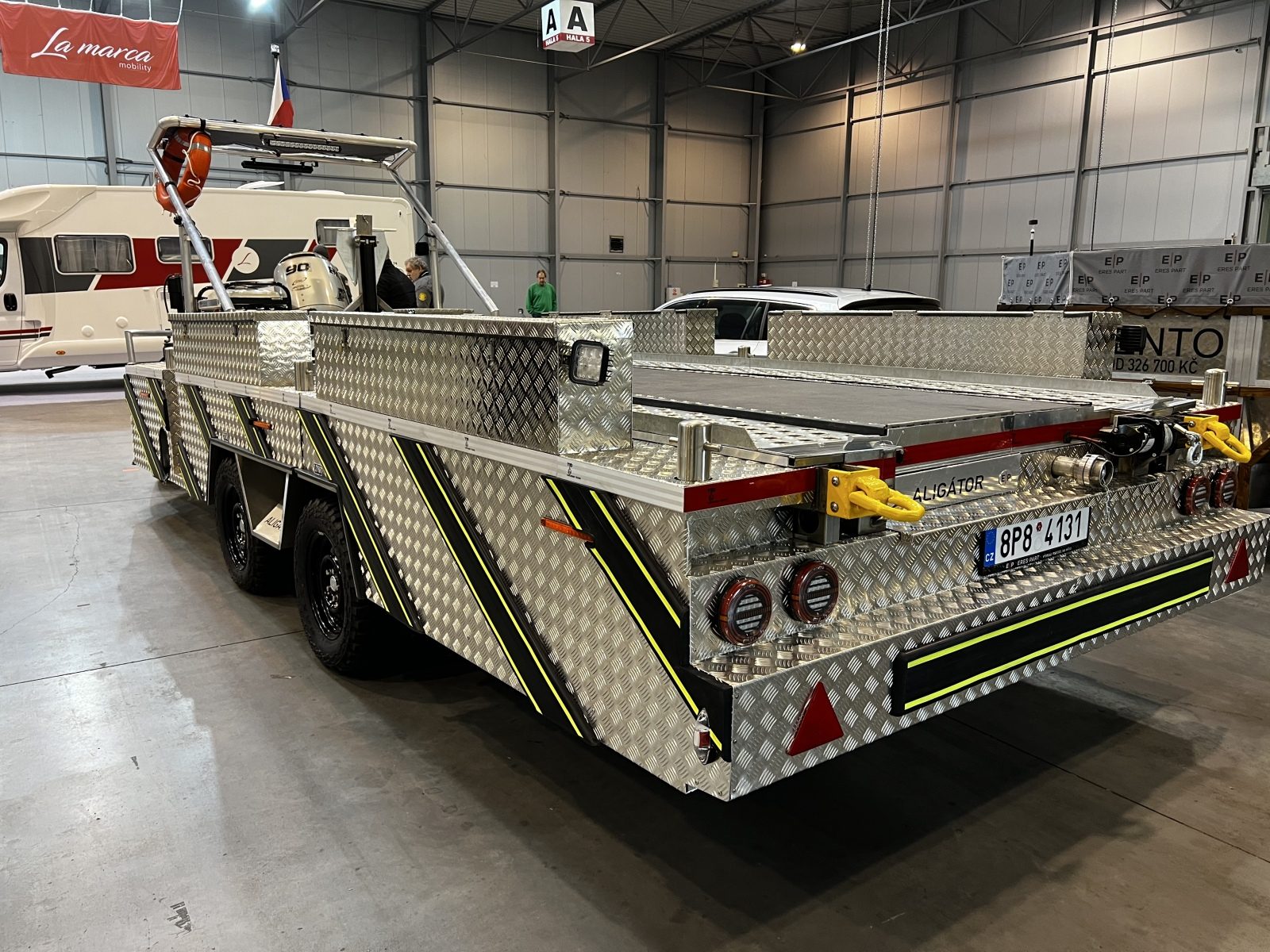
Aluminium ramps 3.5 m long fit at the stern on plug-in pins; hand winches on the rear rail posts adjust their height, so people and a buggy can land even on a raised bank up to three metres away.
The bow winch pulls 3.1 t and the stern winch 2.2 t — worked against each other they turn the craft into an emergency ferry across up to 33 m of water. Two towing eyes at the stern take craft up to 6.5 t.
Getting into the water
An extension bar adds 4 m between the towing vehicle and the craft, so it can be launched where there is no proper slipway. Coming back, you moor four metres out and hitch up.
The overrun brake sits 105 cm off the ground, matching Tatra, Scania or Mercedes-Benz Actros trucks. Plug in the electrics, drop the coupling on and it is ready to roll.
What the trials showed
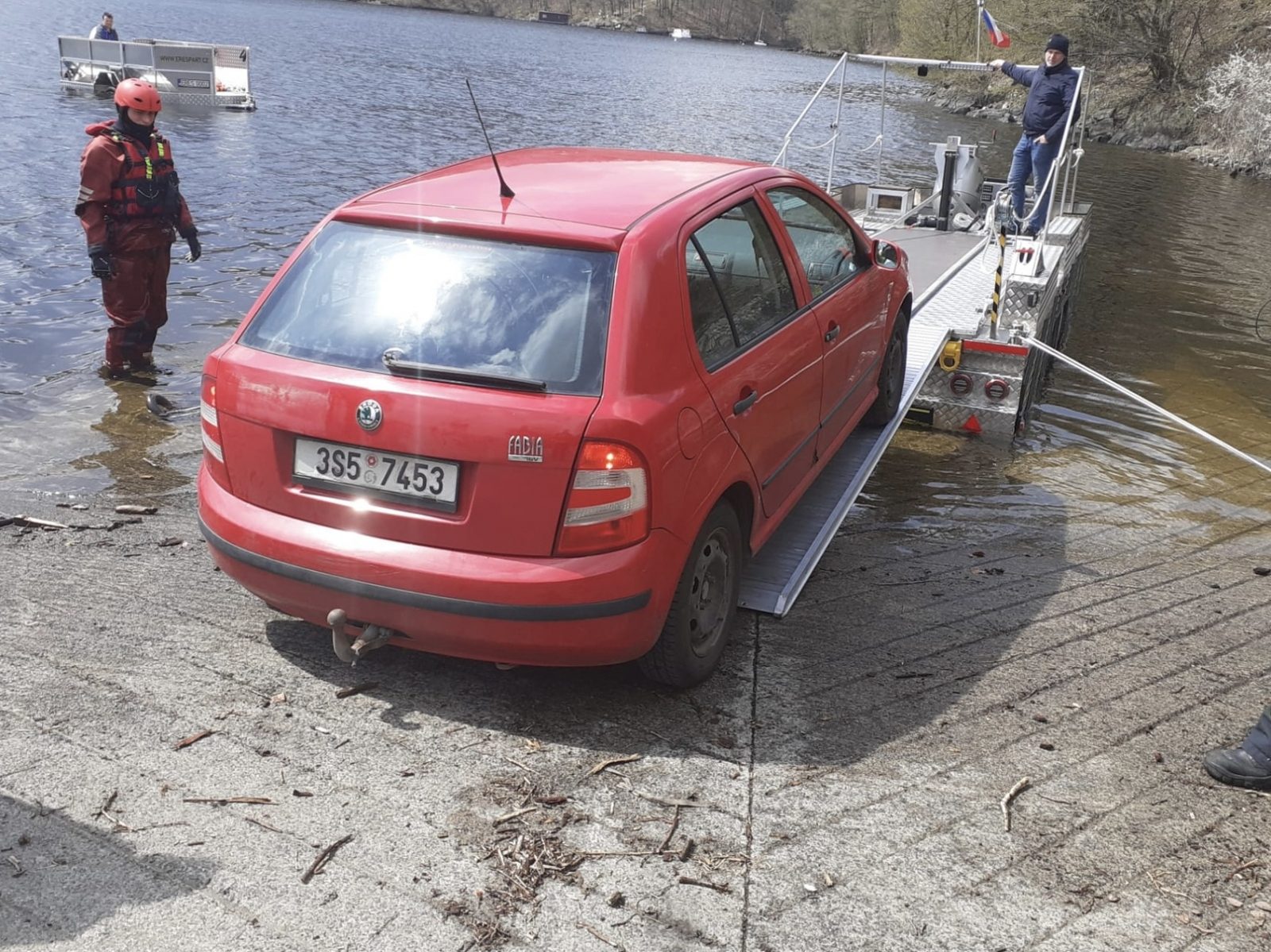
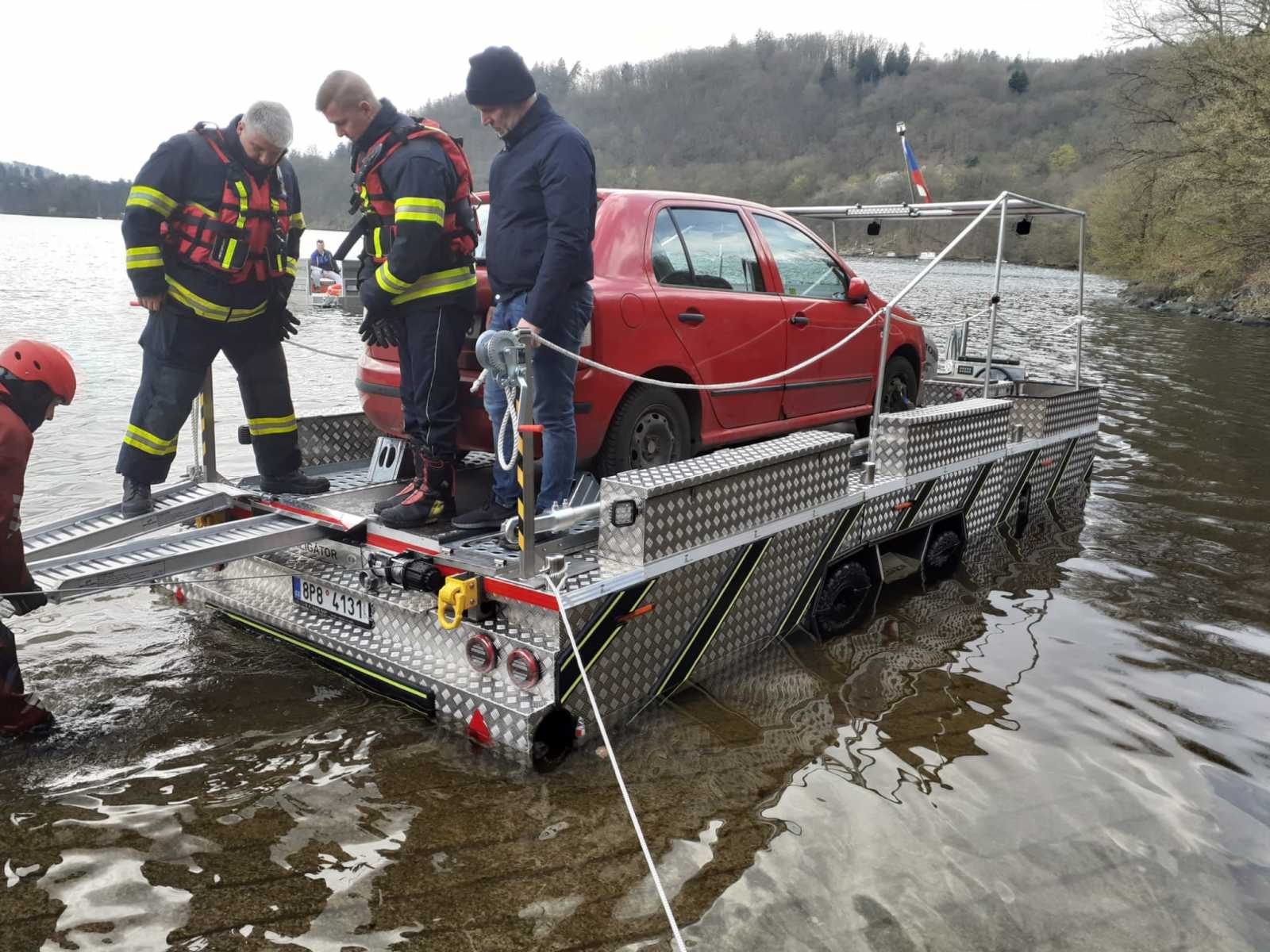
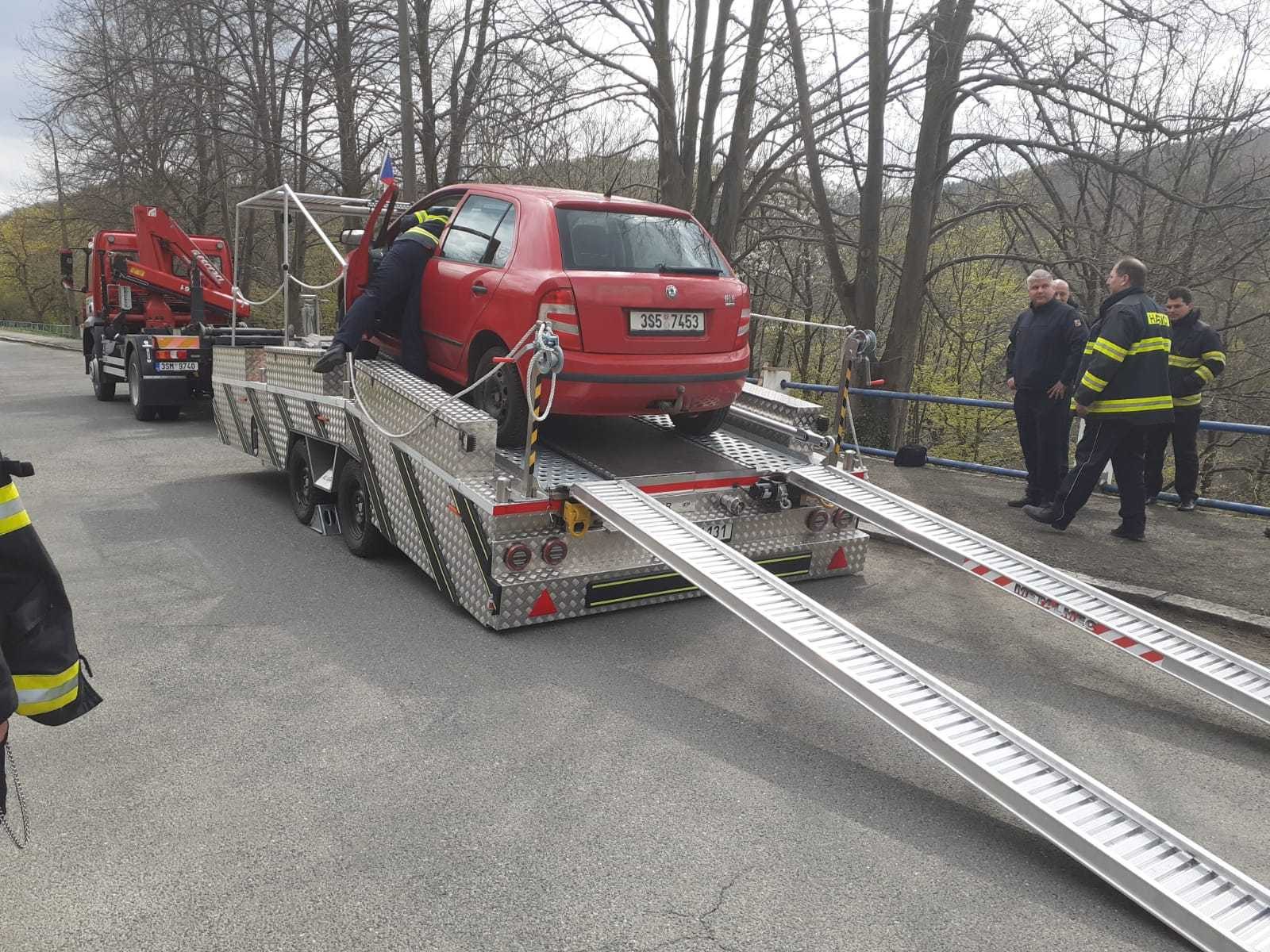
We tested the craft in bad weather — which is the weather equipment like this should be tested in. The trials covered loading a car and a quad without a towing vehicle attached, entering the water loaded, cruising, and landing on an unprepared bank.
Afloat with a car and ten people aboard: around 9 km/h (5 knots) with minimal roll. The car drove off onto the bank without jack-knifing the trailer; the stern winch was enough to hold the craft against the shore.
Landing the quad on a forest bank needed no mooring at all — reverse gear engaged and one crew member holding the stern line did the job.
Photo gallery
New generation · 2025
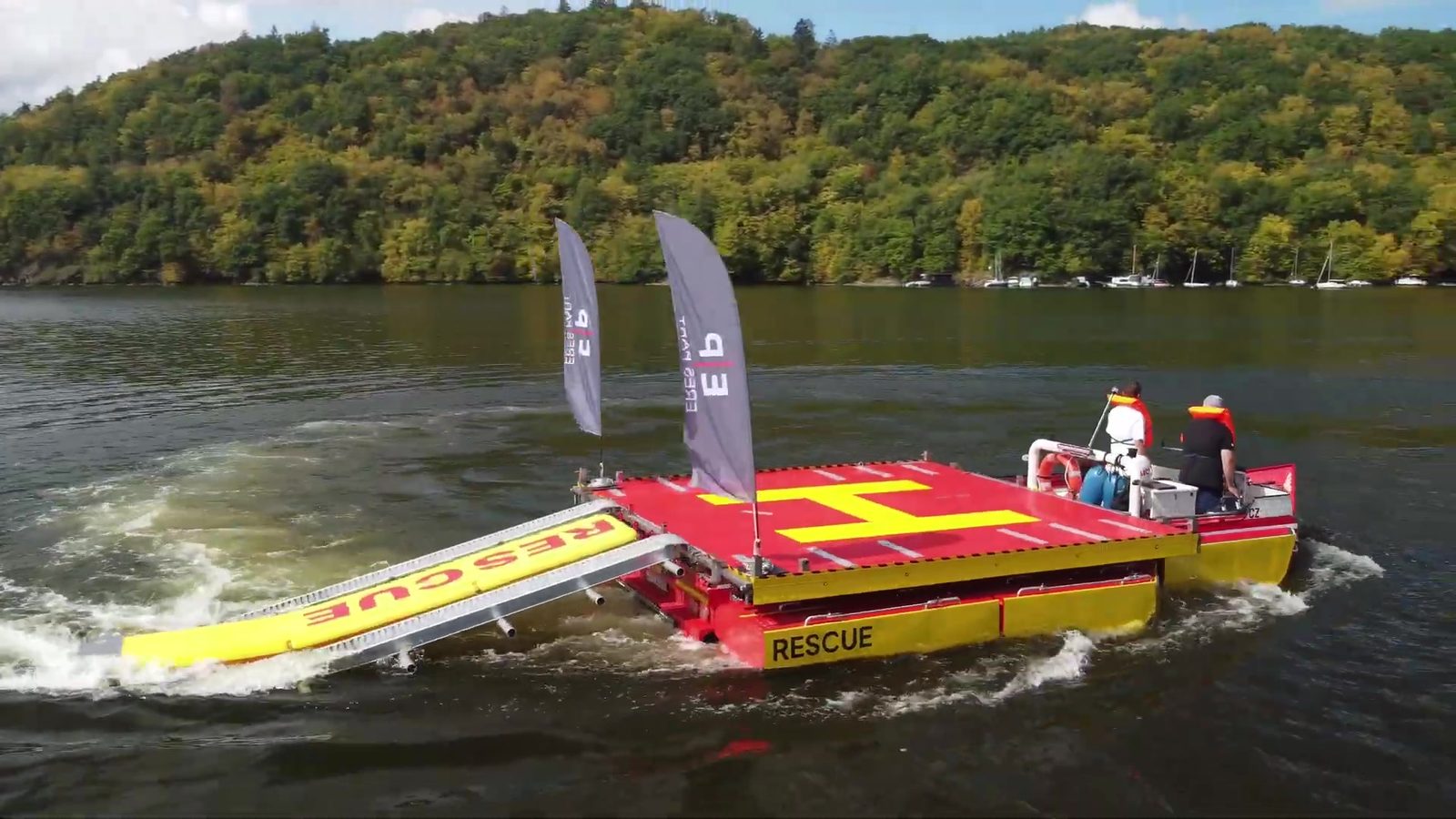
ALLIGATOR as a floating helipad
In September 2025 we introduced the new generation — a floating multi-purpose platform that is no longer just a ferry for equipment. It is a helicopter landing pad, a base for heavy-lift drones and a transport craft in one.
The platform takes a helicopter up to three tonnes and handles both landing and take-off. It also works as a launch and service base for heavy-lift drones — equipment that otherwise cannot reach a flooded area at all.
Total payload is 3.5 tonnes, the fuel tanks hold 1,700 litres and the platform carries its own lighting for night operations. It moves vehicles, supplies and people, on water and on land.
The new-generation ALLIGATOR is built for fire brigades, rescue services and emergency response units in the Czech Republic and across Europe.
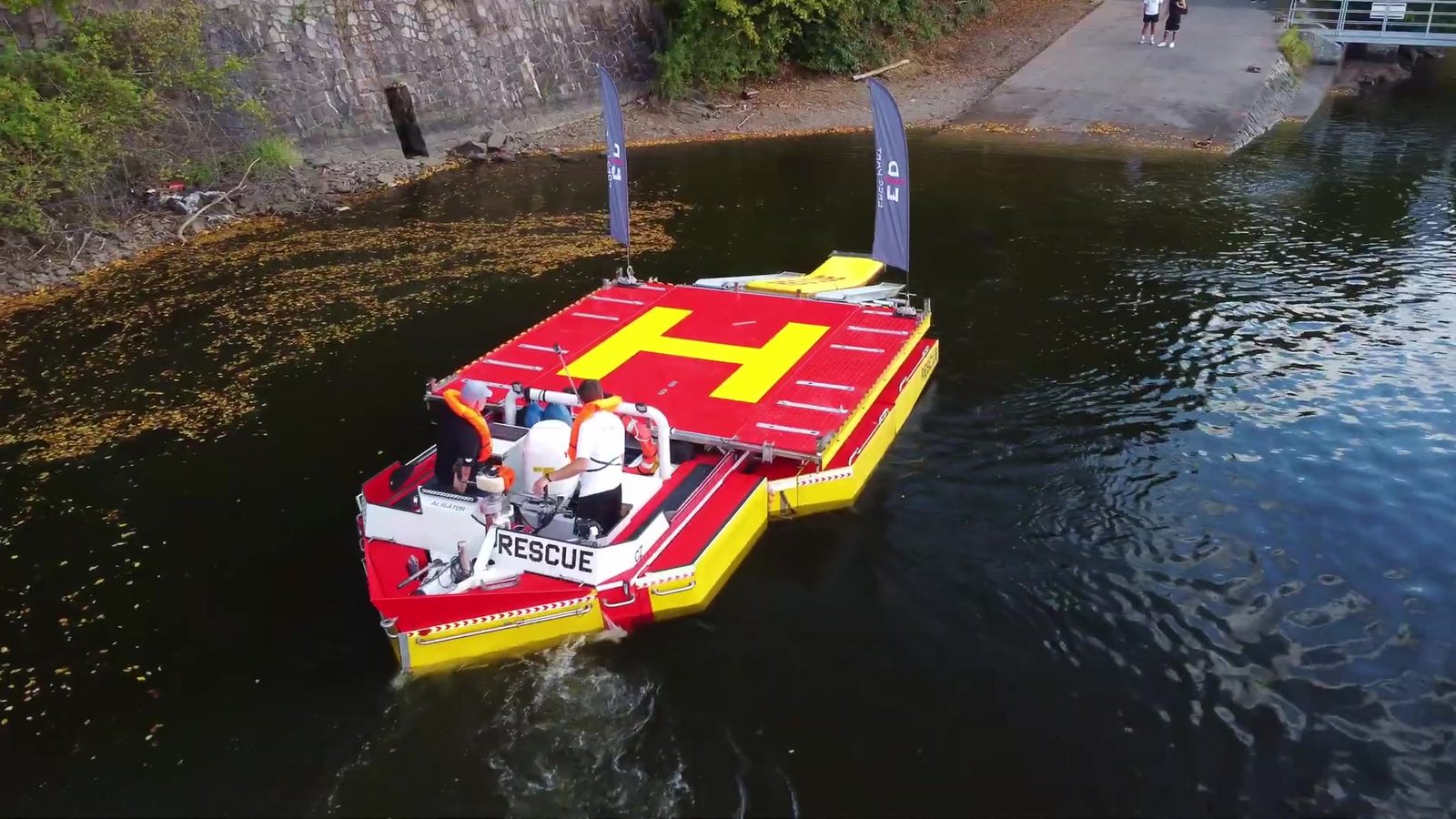
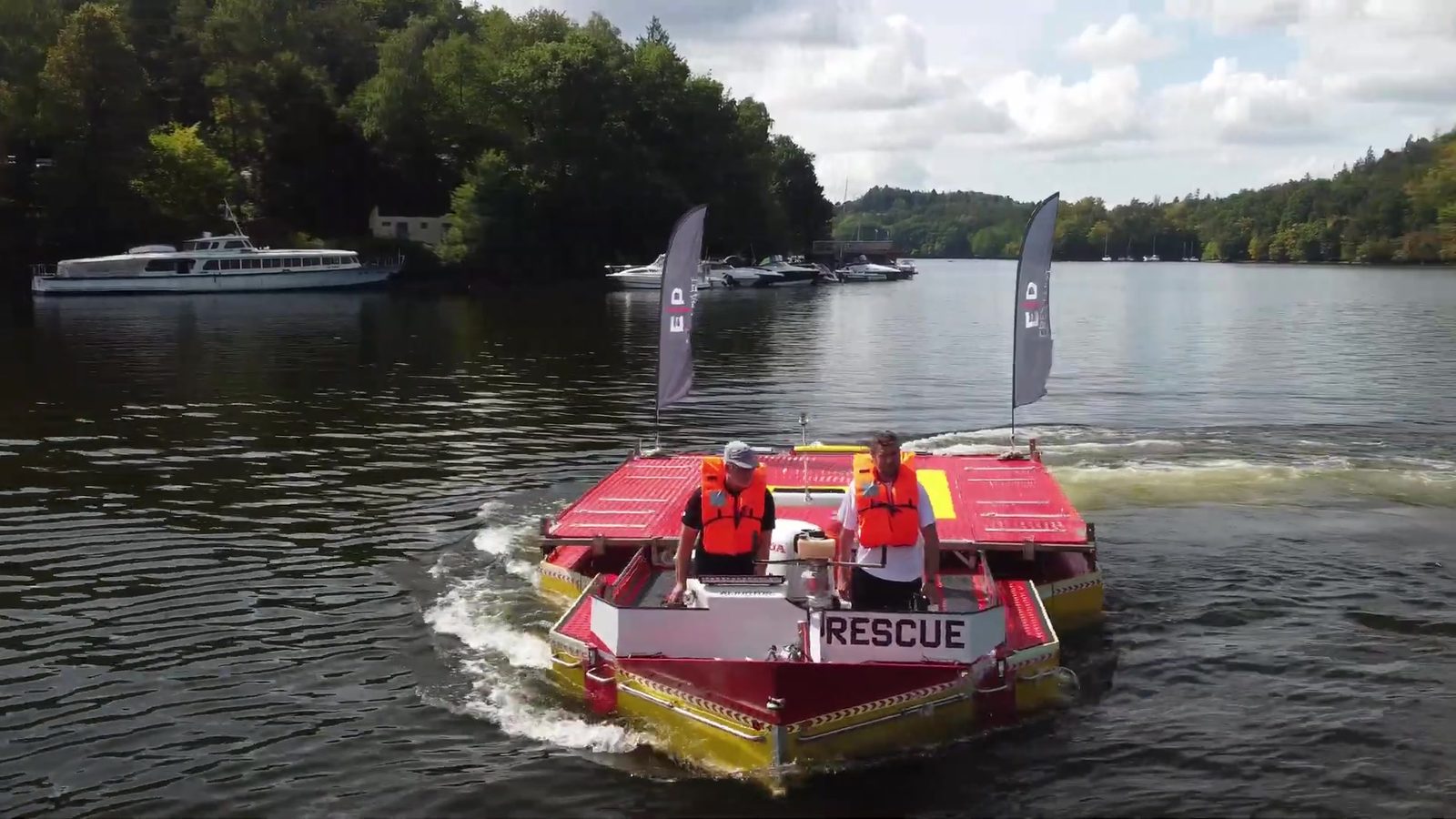
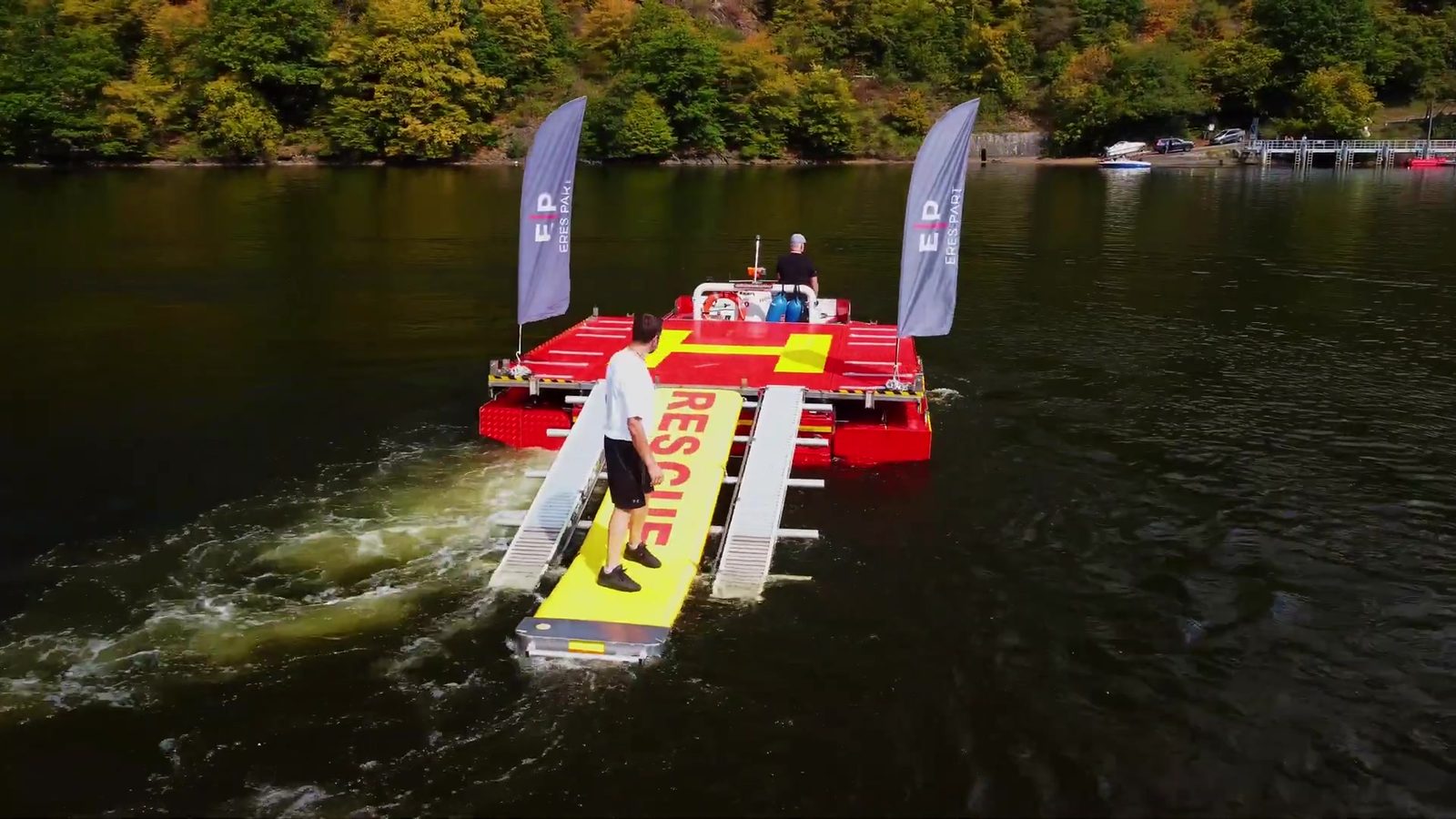
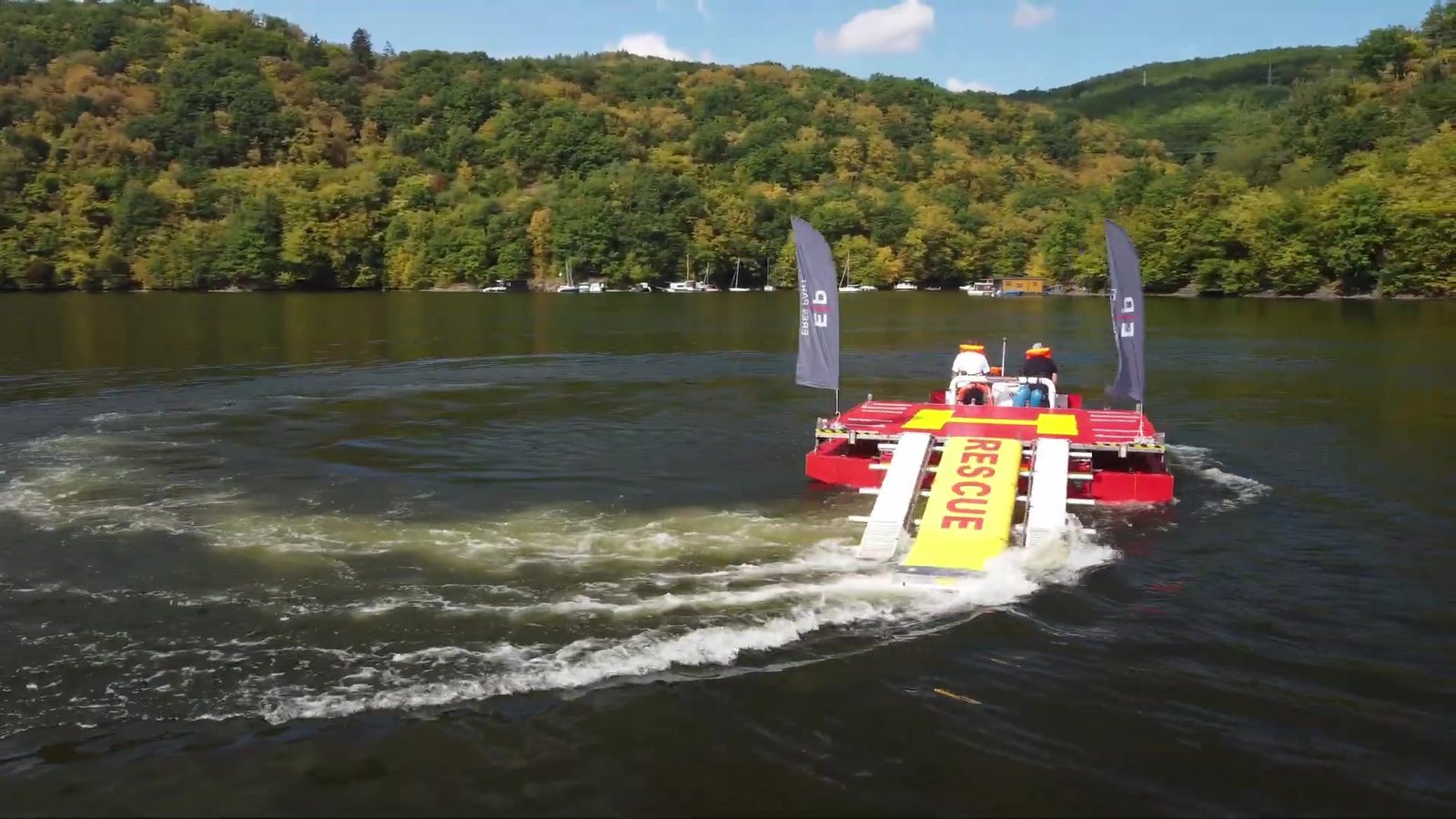
ALLIGATOR: the new generation of rescue equipment
Full walk-around of the platform in service, September 2025.
Video
First water test
Launching the craft, checking stability and draught.
Trials in bad weather
Loading vehicles, cruising under load, landing on an unprepared bank.
The finished craft
Rescue-service version with all ramps and winches.
More projects
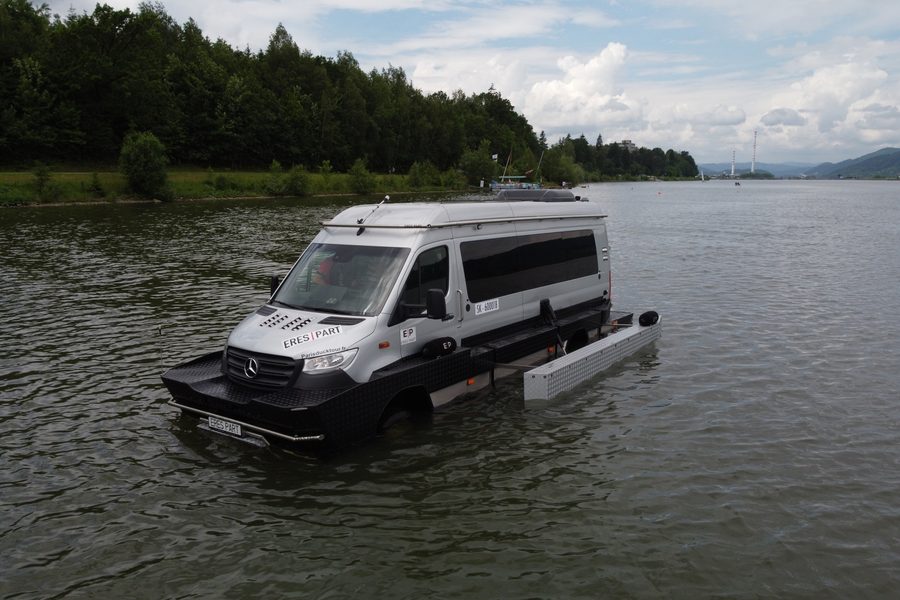
RiverVan Trimaran EP1
A Sprinter 4×4 carrying twelve passengers on road and on water
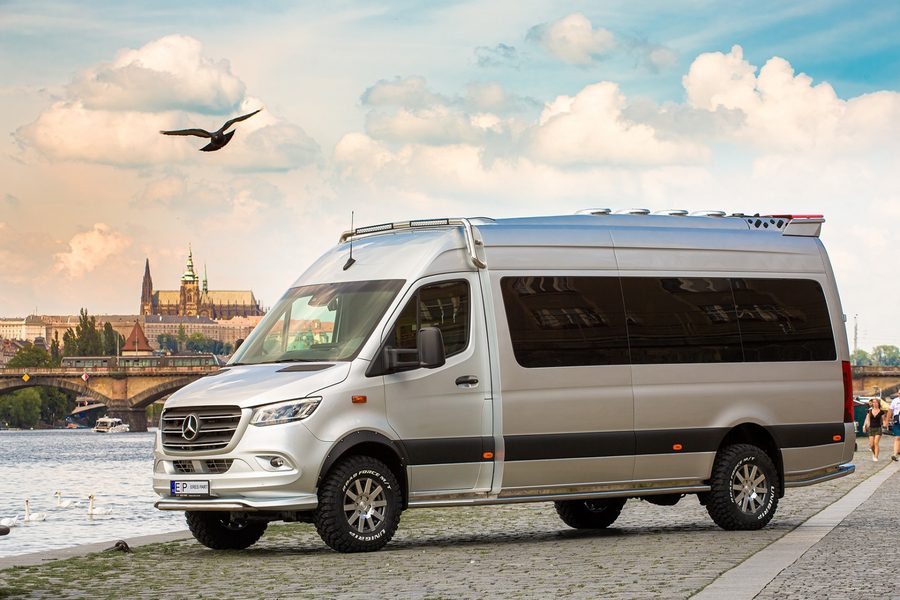
VIP Sprinter 4×4
Leather lounge, bar, electro-dimming glass — on a 4×4 chassis
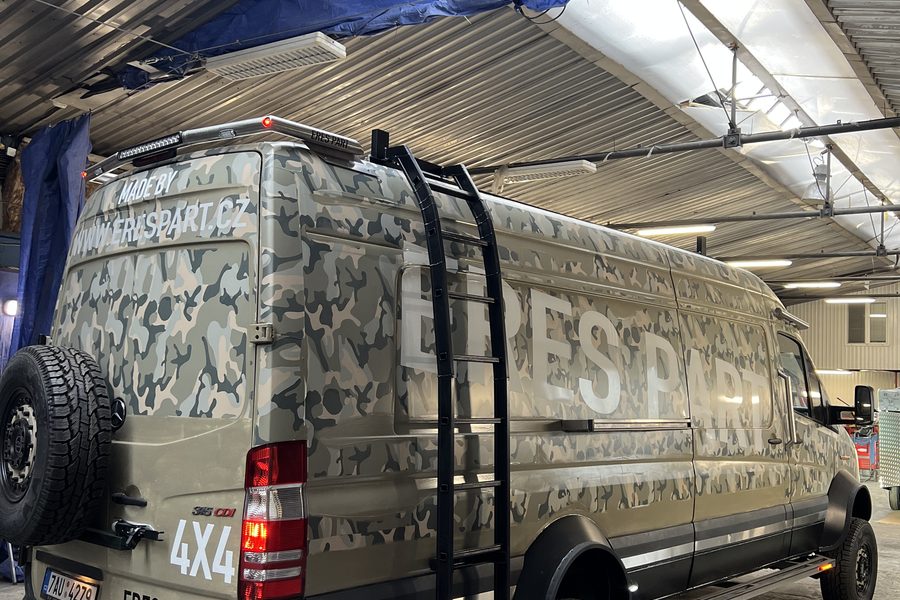
Offroad Sprinter 4×4
A platform for motorhome and working vehicles that have to reach hard places
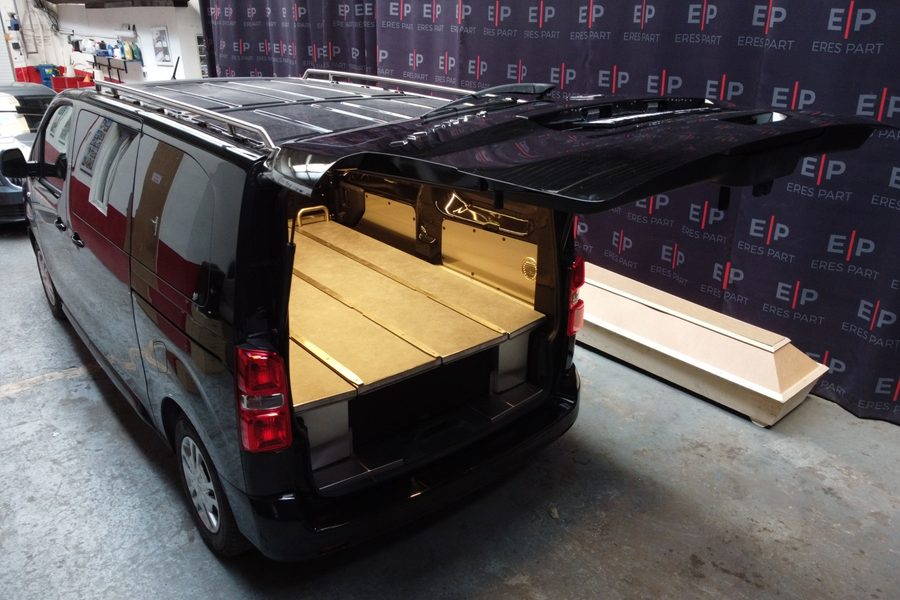
Hearse
Powered coffin trays, widened rear pillars, dimmable LED lighting